Crazy Cakes
Zoanthus sp.


Species profile
Palythoa sp.
Also sold as: Blue Deaths, Blue Death paly, Blue Death palythoa, Blue Death protopaly
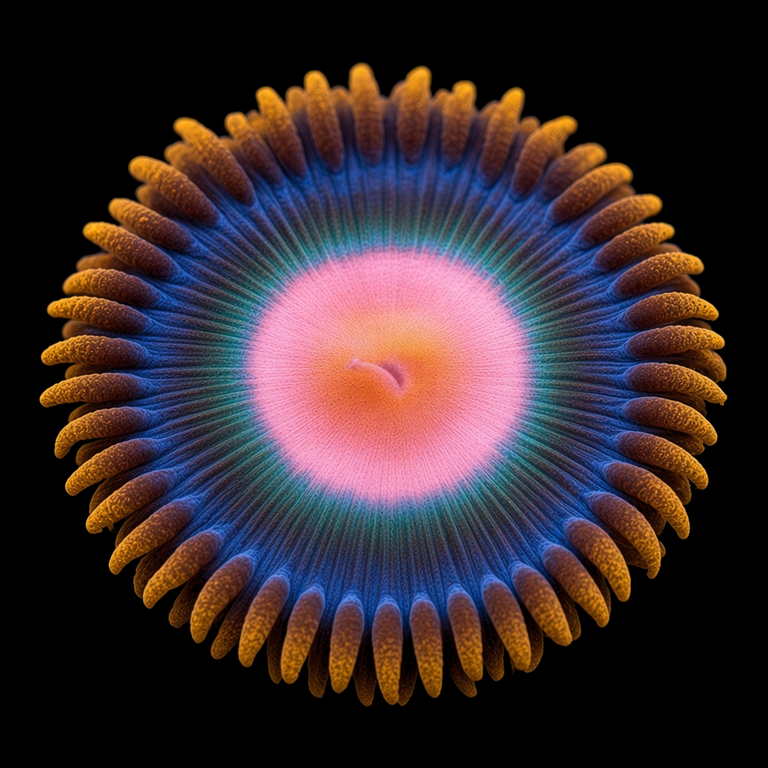
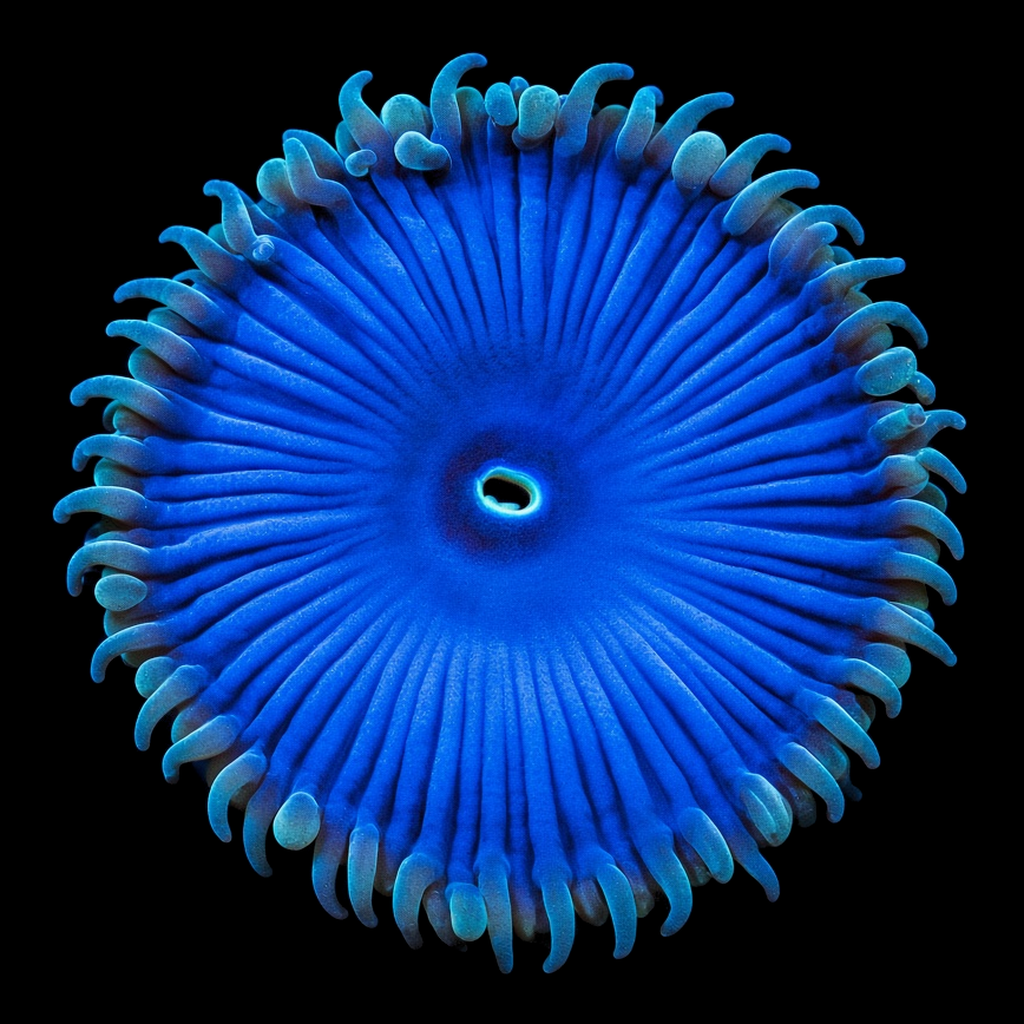
Blue Death is a Palythoa with ridged royal blue to indigo discs and teal to mint-green tentacles that needs careful, protective handling.
Colors
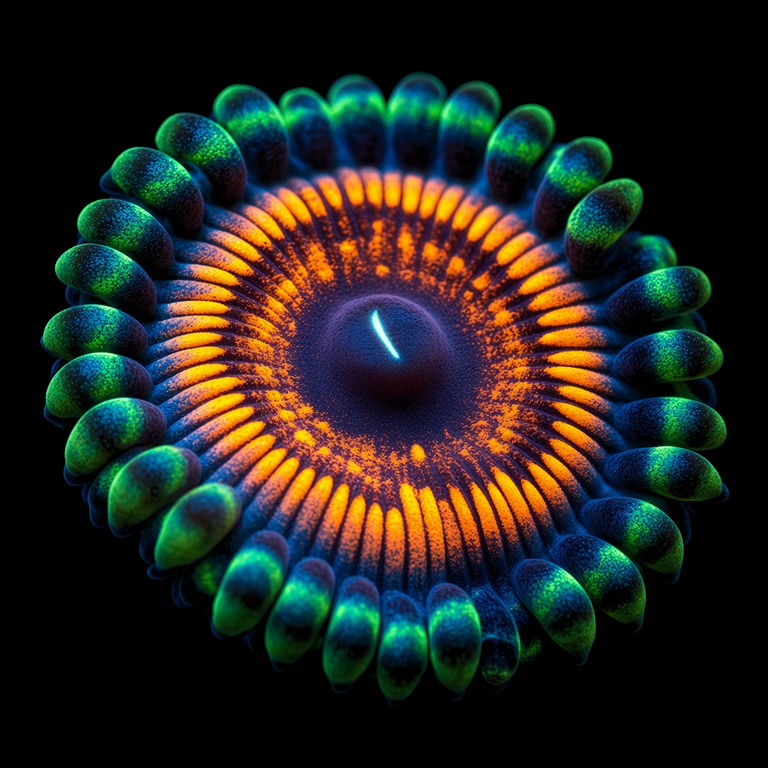
Bright royal blue to indigo oral disc with fine raised radial ridges separated by thin dark purple to maroon lines; a small, round pale aqua to green mouth ringed in dark purple to maroon; and teal to mint-green tentacles, many ending in rounded pale mint to aqua tips, with a purple-maroon tint at the base in places
Moderate
Low to Medium
30-150 PAR
Moderate
Moderate
An isolated rock or frag plug on lower to middle rockwork, away from other corals and in a spot you can reach without disturbing it
75 to 80°F (24 to 27°C)
1.024-1.026 specific gravity (about 32-35 ppt)
Mostly light-fed, but takes fine particulate and small frozen foods more readily than most zoas; once or twice a week.
Photosynthetic, but takes particulate and small frozen foods more readily than most zoas; feed once or twice a week
Day-to-day care is simple, but handling it safely is the hard part, which is why it is rated Moderate rather than Easy. At a glance Blue Death can pass for Purple Death, but side by side its discs read bluer, closer to indigo in some colonies. The ridged blue face, dark-ringed mouth, and teal to mint tentacles stand out under blue light. It is reported to grow a little more slowly than Purple Death, so a frag stays manageable for longer, but still keep it on its own rock so you never have to cut it back in place. Photos of this morph range from bright blue to indigo, so buy from photos of the actual colony. If you aren’t prepared to follow full palytoxin precautions, choose a Zoanthus morph instead.
Blue Death is a Palythoa, and Palythoa are generally considered more toxic than Zoanthus, so treat it as toxic. Always wear gloves and eye protection, never frag it out of water or with power tools, and never boil or scrub rock it grows on. See the Palytoxin Safety guide before handling it.