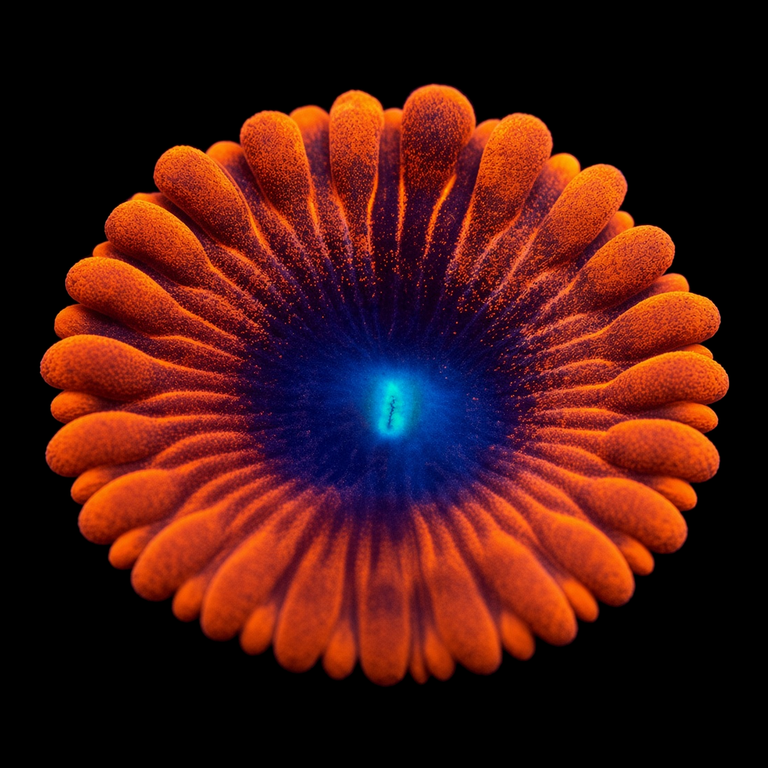
Cinder
Zoanthus sp.


Species profile
Zoanthus sp.
Also sold as: Purple Hornets
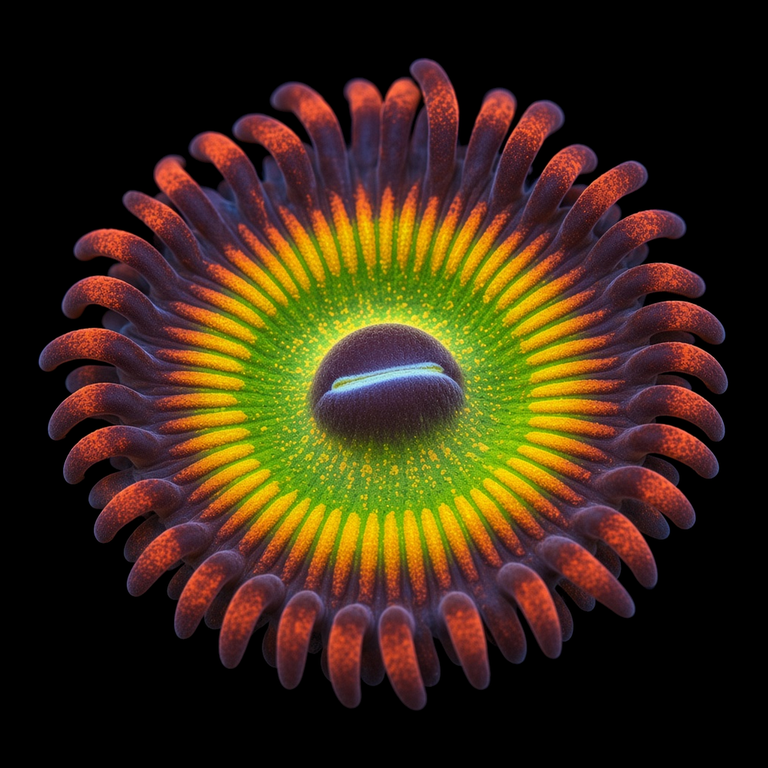
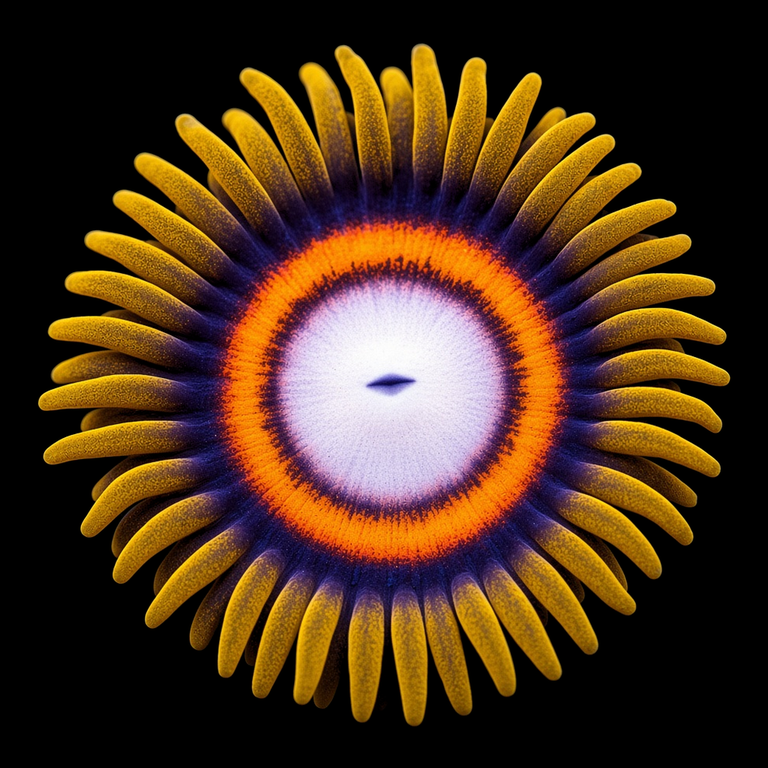
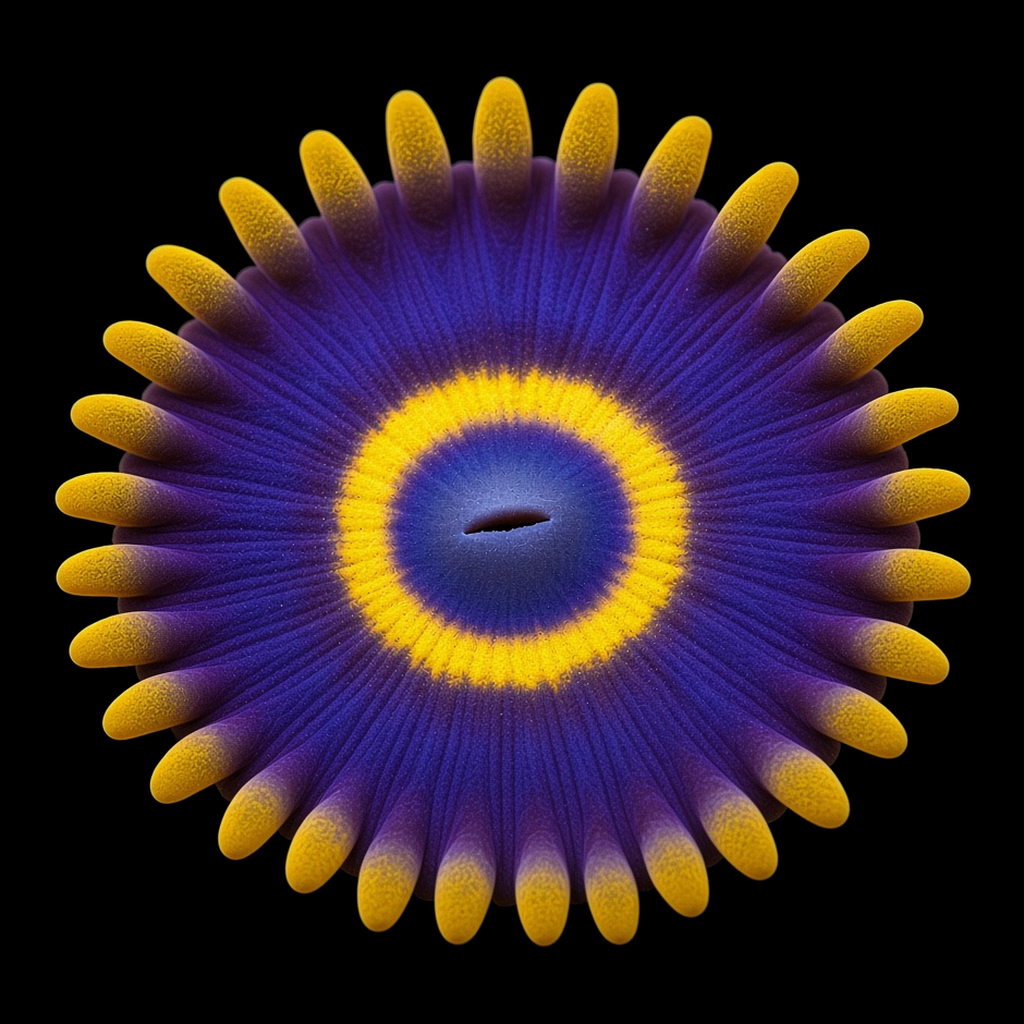
Purple Hornet pairs a deep purple face with a bright yellow skirt and grows into tight, even clusters.
Colors
Deep purple disc, a blue to blue-gray mouth, a thin yellow ring, and a solid yellow to green-yellow skirt
Easy
Medium
75-150 PAR
Moderate
Moderate
Middle to lower rockwork
75 to 80°F (24 to 27°C)
1.024-1.026 specific gravity (about 32-35 ppt)
Optional
Photosynthetic; optional fine particulate food once or twice a week
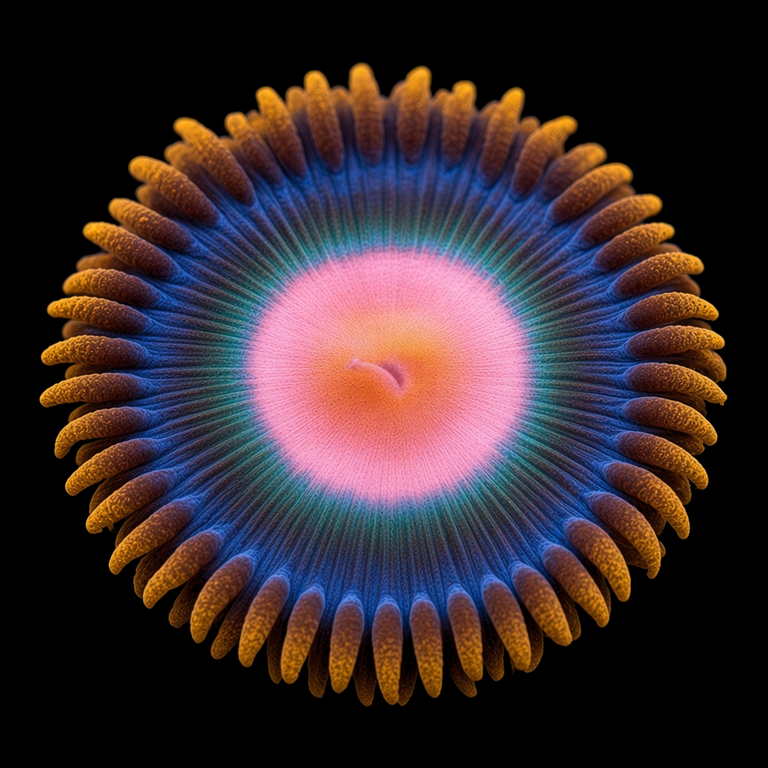
The purple-and-yellow contrast is the whole show here, and it holds up under most light spectrums, so Purple Hornet looks good in photos and in person. Shoppers mix it up with Blue Hornet all the time. The quickest tell is the skirt. Purple Hornet usually has a solid yellow or green-yellow skirt, while Blue Hornet often alternates blue and green and has a lighter, whitish center. Many keepers find Purple Hornet grows a little faster, in tighter, more compact clusters. Keep it out of strong direct flow. Polyps that stay half closed with their skirts tucked in are usually being pushed around too much.
Like any zoanthid, Purple Hornet may contain palytoxin, so treat it as toxic. Wear gloves and eye protection when handling or fragging, and wash up afterward.